
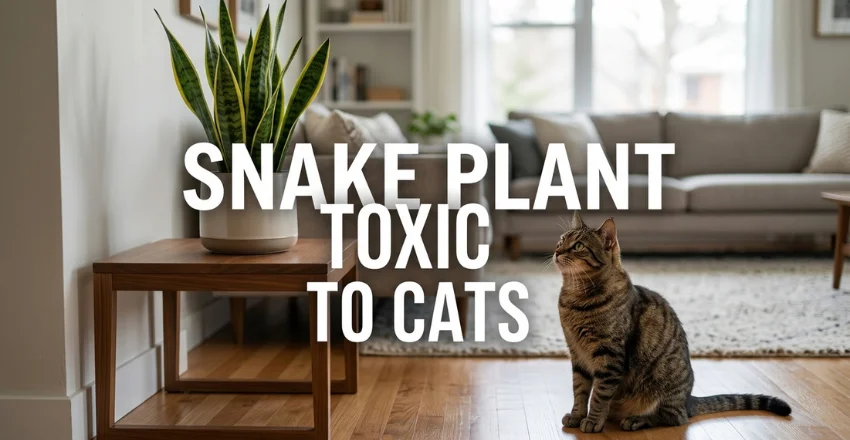
If you searched “snake plant toxic to cats,” the answer is yes. The ASPCA classifies this popular houseplant as toxic when cats ingest it. Its natural saponins can cause nausea, vomiting, and diarrhea.
Quick answer: This houseplant contains saponins in its leaves and stems. Cats that chew or swallow it may develop drooling, nausea, vomiting, or diarrhea. Pet Poison Helpline also reports dilated pupils and a wobbly gait in cats. Contact a veterinarian or poison service after any known ingestion.
Key Facts at a Glance
| Question | Answer |
|---|---|
| Is the plant toxic to cats? | Yes, when ingested |
| Toxic compound | Saponins |
| Common signs | Nausea, vomiting, diarrhea, drooling |
| Other reported cat signs | Dilated pupils and wobbly gait |
| Main exposure route | Chewing or swallowing leaves or stems |
| ASPCA Poison Control | (888) 426-4435 |
| Pet Poison Helpline | (855) 764-7661 |
| Safer alternatives | Spider plant, parlor palm, cast iron plant |
The plant is often labeled Sansevieria trifasciata in stores and older references. Newer botanical references may call it Dracaena trifasciata. Pet Poison Helpline uses the newer name while listing the familiar Sansevieria name as an alternative.
Key Takeaways
- The plant is toxic to cats if ingested.
- Saponins cause the main toxic effects.
- Vomiting, diarrhea, nausea, and drooling are common warning signs.
- Never use hydrogen peroxide to make a cat vomit at home.
- Contact a veterinarian or animal poison service after a known ingestion.
- Cat-safe plants can remove the risk for homes with persistent plant chewers.
Why Is Snake Plant Toxic to Cats?
Saponins help plants defend themselves against certain pests and organisms. They can irritate a cat’s digestive system after the plant is eaten. The ASPCA lists saponins as the toxic principle responsible for the expected symptoms.
Pet Poison Helpline states that these compounds occur within the leaves and stems. That makes chewing a leaf enough to create possible exposure. The risk comes from ingesting plant material, not just sharing a room with it.
What Symptoms Can a Cat Develop?
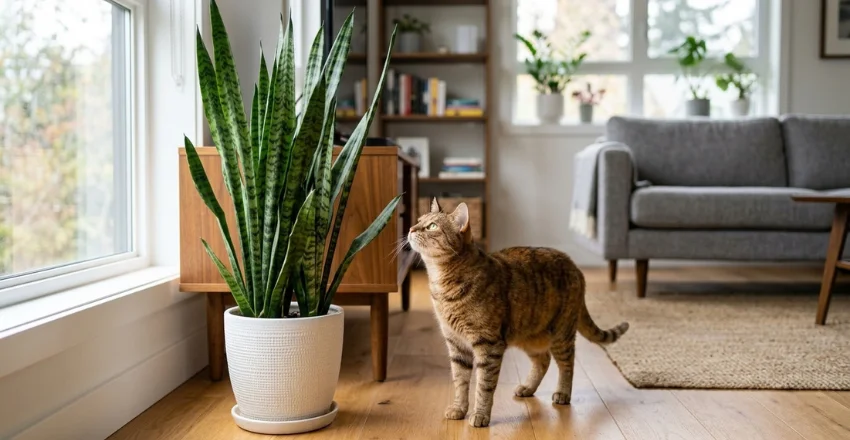
Digestive upset is the main concern after a cat eats part of the plant. ASPCA guidance lists nausea, vomiting, and diarrhea as clinical signs. Pet Poison Helpline also identifies drooling among the possible effects.
Watch your cat for these signs after a suspected exposure:
- Drooling or excessive saliva
- Nausea or reduced interest in food
- Vomiting
- Diarrhea
- Dilated pupils
- Wobbly or unsteady walking
Dilated pupils and a wobbly gait have been reported specifically in cats. Symptoms can vary depending on how much was eaten and the individual animal. A veterinarian can assess those factors better than a home estimate.
How Dangerous Is a Bite?
No reliable household formula can tell you whether one bite is harmless. Veterinary sources do not provide one universal toxic dose for every cat. Body size, health, exposure amount, and individual response can affect the outcome.
A cat may nibble a leaf and show few obvious signs at first. Another cat may develop vomiting or drooling after a similar incident. Calling a veterinarian gives you advice based on the specific exposure rather than guesswork.
Do not wait for dramatic symptoms before asking what to do. The ASPCA lists the snake plant as toxic to cats, names saponins as its toxic principle, and advises calling poison control or a veterinarian after a suspected ingestion. Early guidance can also prevent unsafe home treatments.
What to Do If Your Cat Eats a Snake Plant
Move your cat promptly, but avoid unapproved home treatments. Pet Poison Helpline advises owners to remove pets from the exposure area first. It also recommends checking whether the animal is breathing and behaving normally.
- Move your cat away from the plant. Prevent more chewing and remove fallen pieces from the area.
- Identify what was eaten. Keep the plant label or take a clear photograph for your veterinarian.
- Estimate the exposure. Note when it happened and how much plant material appears missing.
- Call your veterinarian. Explain the plant, possible amount eaten, timing, and any symptoms.
- Use a poison service when needed. U.S. owners can call ASPCA Poison Control at (888) 426-4435.
- Another option is Pet Poison Helpline. Its current number is (855) 764-7661, and a consultation fee applies.
- Do not induce vomiting yourself. Follow professional instructions instead.
Do not give hydrogen peroxide to cats to induce vomiting at home. ASPCA guidance says it can irritate the feline stomach and esophagus. The organization states there is no safe at-home method for making a cat vomit.
Pet Poison Helpline gives similar advice for poisoning emergencies. It says owners should not provide home antidotes or induce vomiting without professional guidance. Keep your cat nearby for observation while following the instructions you receive.
Can Cats Touch or Smell the Plant?
Veterinary poison references focus on ingestion as the exposure that causes toxicity. A cat walking past the plant does not create the same concern as chewing it. Smelling the leaves also does not mean toxic plant material has been swallowed.
Still, access matters because cats often investigate plants with their mouths. A cat may bite leaves after sniffing or pawing at them. Broken plant pieces can also become easier targets on the floor.
Can You Keep One in a Home With Cats?
Removing the plant is the simplest way to reduce risk for a persistent plant chewer. High shelves are less dependable because many cats climb or jump well. A closed room that your cat cannot enter provides stronger separation.
If you keep the plant, consider these precautions:
- Place it inside a room that stays closed to your cat.
- Pick up trimmed or broken leaves immediately.
- Avoid placing the pot beside climbable furniture.
- Use a stable container that cannot tip easily.
- Give your cat appropriate enrichment away from houseplants.
- Check new plants against a veterinary toxicity database before buying them.
Cat behavior can change over time, so past disinterest does not guarantee future avoidance. Kittens and curious adults may start chewing plants without warning. Replacing a toxic species removes the need to depend entirely on placement.
For broader animal-care reading, the ReadsBest Pets section collects the site’s current pet guides. It can also help multi-pet households find related safety topics. Keep veterinary contact details available regardless of which pets share your home.
Cat-Safe Alternatives With a Similar Indoor Role
A safer plant can make sense when your cat repeatedly chews greenery. The ASPCA identifies several common houseplants as non-toxic to cats. Plant safety still does not mean unlimited chewing should be encouraged.
| Alternative | ASPCA cat status | General appearance | Useful for |
|---|---|---|---|
| Cast iron plant | Non-toxic | Upright, broad green leaves | A simple vertical look |
| Parlor palm | Non-toxic | Upright, feathery fronds | Softer indoor greenery |
| Spider plant | Non-toxic | Arching striped leaves | Shelves and hanging displays |
| Prayer plant | Non-toxic | Patterned foliage | Decorative color and texture |
The cast iron plant is a practical option for owners who like strong upright foliage. Parlor palms offer height without the same toxic classification. Spider plants work well when you prefer leaves that arch rather than stand vertically.
Always confirm the exact plant name before bringing it home. Common names can refer to different species, which creates avoidable confusion. The ASPCA cat plant database provides searchable toxic and non-toxic listings.
Are Snake Plants Toxic to Dogs Too?
Yes, veterinary sources also classify them as toxic to dogs after ingestion. ASPCA guidance lists the same main digestive signs, including nausea, vomiting, and diarrhea. Multi-pet households should therefore keep the plant away from both species.
Dog owners can also review the ReadsBest guide on keeping dogs healthy and safe from disease. Puppy owners may also find the guide to fast breathing while sleeping useful. Those articles address different health concerns but support broader pet-safety planning.
When Should You Seek Urgent Veterinary Help?
Call for veterinary guidance whenever you know your cat swallowed a potentially toxic plant. Faster action matters more when symptoms are already developing. Tell the veterinarian about vomiting, diarrhea, drooling, abnormal pupils, or unsteady walking.
Pet Poison Helpline advises checking whether the animal is breathing and acting normally after a poisoning exposure. It recommends contacting a veterinarian or emergency clinic when veterinary attention is needed. The service is available around the clock for U.S. poison questions.
Do not delay emergency care if your cat is not breathing or behaving normally. Bring the plant label, photograph, or sample when your veterinarian requests it. That information can help professionals identify the exposure faster.
Frequently Asked Questions
Is Snake Plant Toxic to Cats After One Small Bite?
Yes, veterinary databases classify the plant as toxic when ingested. One small bite does not predict exactly how an individual cat will respond. Contact your veterinarian for advice based on the amount, timing, and symptoms.
Can This Plant Kill a Cat?
Official plant entries identify the species as toxic but do not publish one universal lethal dose. Their listed effects focus mainly on digestive signs and several additional cat-specific symptoms. Treat known ingestion seriously rather than trying to predict severity at home.
Should I Make My Cat Vomit?
Use no home method unless a veterinary professional gives specific instructions. The ASPCA warns that hydrogen peroxide is unsafe for cats and can damage their digestive tissues. Call your veterinarian or an animal poison service instead.
What Should I Replace the Plant With?
Cast iron plants, parlor palms, and spider plants are ASPCA-listed non-toxic choices for cats. Each provides indoor greenery without the same toxic classification. Confirm the scientific name before buying because common plant names can overlap.
Your Next Step
Move the plant somewhere your cat cannot access while you decide whether to keep it. Save your veterinarian and animal poison numbers in your phone before an emergency happens. If your cat has already eaten any part, contact a veterinary professional now rather than waiting for symptoms.