
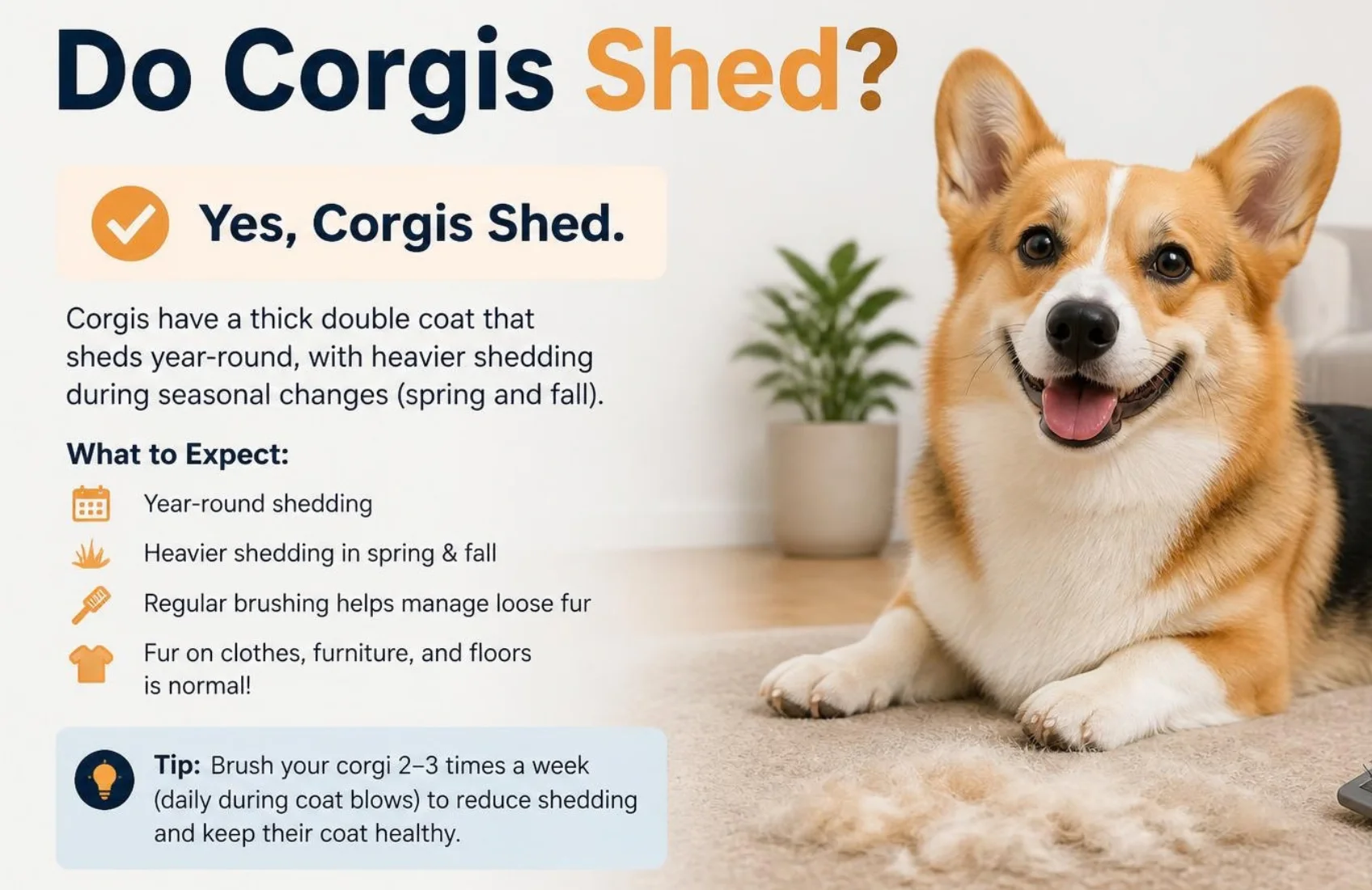
Dog hair is part of life with this breed, even though their coats look neat and compact. If you are asking “do corgis shed,” the answer is yes, and usually more than first-time owners expect. Both Pembroke and Cardigan Welsh Corgis have double coats that release hair throughout the year.
Short answer: Yes, both Pembroke and Cardigan Welsh Corgis shed year-round. Their dense double coats release loose hair regularly and usually shed more during seasonal coat changes. Regular brushing removes loose undercoat before it reaches your floors, but no grooming routine can stop natural shedding completely.
| Question | What to expect |
| Shedding level | Moderate to heavy |
| Shedding frequency | Year-round |
| Heaviest periods | Usually spring and fall |
| Coat type | Dense double coat |
| Best control method | Consistent brushing |
| Hypoallergenic | No |
| Major warning signs | Bald patches, itching, redness, or sudden coat changes |
Key Takeaways
- Both Welsh Corgi breeds have double coats and shed regularly.
- Seasonal coat changes can produce much heavier shedding than normal.
- Brushing removes loose undercoat before much of it reaches your furniture.
- Dog allergies involve dander and other proteins, not just loose fur.
- Sudden hair loss, bald areas, or irritated skin should prompt a vet visit.
Why Do Corgis Shed So Much?

Do corgis shed? Two coat layers explain most of the mess. The outer coat is coarser and weather-resistant, while the undercoat is soft and dense. As the coat renews, the undercoat releases loose hair, sending fine fur onto floors and fabrics.
Pembrokes often shed daily, while Cardigans also shed more heavily during seasonal coat changes. Both breeds developed weather-resistant coats suited to outdoor work. That useful insulation is why a small dog can create a surprising amount of loose hair.
When Is Corgi Shedding Heaviest?
Seasonal coat changes can make normal shedding look dramatic. AKC guidance says double-coated dogs often shed most heavily in spring and fall. Pembrokes may also show a strong late-spring or early-summer shedding period.
In much of the United States, spring and fall are the most familiar heavy-shedding periods. Yet timing varies between dogs, so not every coat follows the same calendar. Track your dog’s normal pattern instead of judging one week against a fixed month.
Pembroke vs. Cardigan: Does One Shed Less?
| Coat factor | Pembroke Welsh Corgi | Cardigan Welsh Corgi |
| Coat structure | Weatherproof double coat | Dense double coat |
| Routine shedding | Common daily shedding | Regular shedding |
| Seasonal increase | Often late spring or early summer | Commonly heavier twice yearly |
| Grooming need | Frequent brushing | Regular brushing |
| Low-shedding choice | No | No |
Neither breed is a low-shedding choice. Their coat structures differ in appearance, but both rely on dense undercoat beneath protective outer hair. Choose between them for temperament and fit, not because one promises a fur-free home.
How to Control Corgi Shedding Without Damaging the Coat
Regular brushing is the strongest practical tool for keeping loose hair out of your home. AKC recommends consistent grooming for double coats, with more frequent brushing during heavier shedding. A slicker brush and comb can lift loose hair before it settles on furniture.
| Grooming task | Normal periods | Heavy shedding periods |
| Brushing | Several short sessions weekly | Increase toward daily |
| Coat check | During each brushing | During each brushing |
| Bathing | As needed | Useful when loose coat builds |
| Home vacuuming | Based on visible hair | Increase as necessary |
Work in short sections and brush gently to the skin without scraping it. Stop if you see redness, tenderness, or broken skin, and review the basics of keeping your dog healthy if irritation keeps returning. During a coat blow, shorter daily sessions are easier than one long weekly battle.
Baths can loosen dead hair, but they should support brushing, not replace it. Use a dog-safe shampoo and rinse thoroughly, especially if the skin seems dry. Human shampoo can irritate canine skin and may worsen coat problems.
Dry the coat completely after bathing, especially where the undercoat feels dense. If you use a dryer, introduce the sound gradually and avoid uncomfortable heat. AKC training guidance specifically recommends early dryer acclimation for this thick-coated breed.
Should You Shave the Double Coat?
Routine shaving is not the standard answer for a double coat. Pembroke breed guidance calls for the coat to remain natural, with only limited tidying. Focus on removing loose undercoat instead of cutting the protective coat short.
How Much Hair Should You Expect Around the House?
The easiest way to judge your tolerance is a seven-day fur audit. Brush your dog, vacuum the main living area, then track how quickly visible hair returns. This gives you a better answer than broad labels such as moderate or heavy.
| Area | What you may notice | Practical response |
| Hard floors | Loose hair collecting near walls | Quick vacuum or sweep |
| Carpet | Fur trapped between fibers | Pet-capable vacuuming |
| Sofas | Fine hair on favorite resting spots | Washable furniture covers |
| Clothing | Hair visible on darker fabrics | Keep a lint roller nearby |
| Car seats | Fur collecting after rides | Use washable seat covers |
If black pants collect hair within minutes, the breed may feel high-maintenance. If you already vacuum several times weekly, the added cleanup may feel manageable. The right answer depends on your household habits, not only the dog’s size.
- Are Corgis Hypoallergenic?
Heavy shedding does not cause dog allergies by itself. The AAAAI says reactions come from proteins in dander, saliva, and urine, not simply hair. No dog breed is truly hypoallergenic, so this breed is not an allergy-safe exception.
If someone in your home has asthma or known dog allergies, talk with an allergist before adoption. Spending time around the specific dog may also reveal how that person reacts. Reducing bedroom access and using HEPA filtration can lower exposure, but they cannot remove every allergen.
When Heavy Shedding May Signal a Health Problem
Heavy seasonal shedding can be normal, but patchy hair loss is not typical of a coat blow. Red skin, persistent itching, sores, odor, or sudden bald areas deserve veterinary attention. Changes in thirst, urination, weight, or behavior also warrant a call.
Do not treat a medical coat problem with more brushing alone. A veterinarian can check for allergies, parasites, infections, or hormonal causes when the pattern changes.
Routine coat checks also create a useful chance to notice skin changes early. Use grooming time to inspect ears, paws, and the skin beneath dense areas. Readers can find more everyday care topics in the Readsbest Pets section.
Is This Breed Right for You If You Hate Dog Hair?
If visible fur on sofas and clothes bothers you every day, this breed may frustrate you. No brush can turn a double-coated dog into a low-shedding dog. If regular brushing and vacuuming feel acceptable, the coat is usually manageable with a routine.
A useful decision test is simple: imagine this grooming schedule for the next decade. Then decide whether the cleanup fits your time, budget, and tolerance for visible hair. That question matters more than whether a single shedding week feels extreme.
Your Next Step
Start with a simple week of brushing, vacuuming, and skin checks before buying more grooming tools. Do corgis shed? Adjust the routine around your dog’s actual coat instead of copying a rigid calendar. For more care topics, continue through the Readsbest Pets section.
Frequently Asked Questions
Do Corgis Shed All Year?
Yes, expect some loose hair year-round. Pembrokes are documented daily shedders, and Cardigans have dense double coats with seasonal peaks. The volume usually rises during coat changes, even when grooming stays consistent.
How Often Should I Brush My Dog?
A weekly minimum is a sensible baseline for many double-coated dogs. Pembrokes may benefit from more frequent brushing, especially during heavy shedding. Increase the schedule when your brush fills quickly, or loose tufts appear.
Can I Stop the Shedding Completely?
No, healthy shedding is part of normal coat renewal. Grooming can capture loose hair earlier, but it cannot switch off the hair cycle. Your goal is control, not zero fur.
Are These Dogs Hypoallergenic?
No dog is completely hypoallergenic. Dander and saliva proteins can trigger reactions even when a dog sheds less. An allergist can help a sensitive household assess risk before adoption.
Should I Shave My Dog to Reduce Shedding?
Routine shaving is not recommended as a shedding fix. The double coat should stay intact and receive coat-appropriate grooming. Ask a professional groomer or veterinarian before making major coat changes.