

Small hypoallergenic dogs can suit allergy-prone households, especially when they have low-shedding coats and manageable grooming needs. No breed is completely allergen-free, because reactions come from proteins in dander, saliva, and urine. The right choice balances your allergy response with grooming, energy, temperament, and living space.
Toy Poodles, Bichon Frises, Miniature Schnauzers, Maltese, and Havanese are practical starting points for allergy-prone homes. These breeds are small and generally shed less than many common dogs. No breed is allergen-free, so meet the exact dog before adoption and consult an allergist for significant symptoms.
| Breed | Typical adult size | Shedding | Grooming | Why consider it | Watch-out |
|---|---|---|---|---|---|
| Toy Poodle | 4–6 lb | Minimal | High | Trainable and apartment-friendly | Frequent coat care |
| Bichon Frise | 12–18 lb | Low | High | Social companion | Mat-prone coat |
| Miniature Schnauzer | Under 20 lb | Low | Moderate | Sturdy and trainable | Can be vocal |
| Maltese | Under 7 lb | Minimal | High | Tiny companion | Fragile size |
| Havanese | 7–13 lb | Low | High | Sociable city dog | Frequent brushing |
| Shih Tzu | 9–16 lb | Low | High | Companion-focused | Daily coat care if long |
| Yorkshire Terrier | About 7 lb | Low | High | Tiny and portable | Energetic terrier behavior |
| Coton de Tulear | Small | Low | High | People-oriented companion | Daily grooming |
| Chinese Crested | Small | Low to none | Skin and coat care | Hairless option available | Skin protection matters |
| American Hairless Terrier | 12–28 lb | None to low | Skin care | Very little loose fur | Some adults exceed small size |
Source note: Typical U.S. size and grooming details use current AKC breed guidance.
What “Hypoallergenic” Really Means
The label “hypoallergenic” does not mean a dog cannot trigger allergies. AAAAI says no dog breed is truly hypoallergenic, because allergens also come from dander, saliva, and urine. A peer-reviewed home study also found no consistent allergen advantage for breeds marketed this way.
Low shedding can still matter for household cleanup and may reduce how much allergen-covered hair spreads around a home. That makes coat type useful, but it should not replace a personal exposure test. ReadsBest’s Corgi shedding guide offers a useful contrast with a breed that sheds year-round.
How We Compared Small Hypoallergenic Dogs
This comparison prioritizes compact size, low shedding, grooming demands, exercise needs, and common household fit. Breed traits come from current AKC guidance, while allergy cautions come from medical and peer-reviewed sources. Individual dogs still vary, so breed descriptions should guide screening rather than guarantee outcomes.
For the broadest mix of size, trainability, and minimal shedding, the Toy Poodle is our strongest starting point. The Bichon Frise suits owners who prefer a cheerful companion and can handle frequent grooming. The Miniature Schnauzer offers a sturdier build with a low-shedding coat and moderate grooming needs.
Use three filters before choosing: your reaction to the exact dog, your grooming budget, and your household routine. A breed should pass all three filters rather than winning on coat type alone. This framework prevents a low-shedding coat from hiding a poor lifestyle match.
10 Small Hypoallergenic Dogs Compared
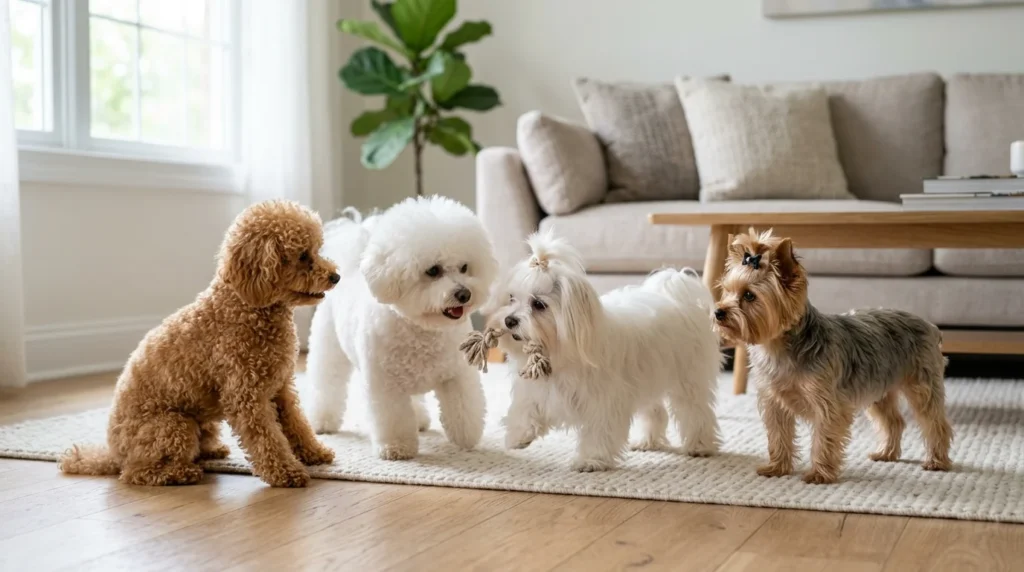
1. Toy Poodle
Toy Poodles weigh about four to six pounds and shed minimally. They learn quickly, which helps owners build consistent grooming, training, and household routines. Their curly coats need regular brushing and professional trimming, so coat care is the main commitment.
2. Bichon Frise
Bichon Frises usually weigh 12 to 18 pounds and shed little. Their friendly, social nature can work well in homes that want an involved companion. Their soft coat mats without regular brushing and trimming, making grooming costs an important budget item.
3. Miniature Schnauzer
Miniature Schnauzers stay under about 20 pounds and have wiry coats that shed little. They are intelligent, active, and sturdy enough for households wanting a compact dog with terrier energy. Many owners use professional grooming because clipping and beard care take consistent work.
4. Maltese
Maltese weigh under seven pounds and have long coats that shed minimally. Their tiny size suits apartments and people seeking a close companion with modest space needs. Long coats need daily care, while short trims can make maintenance easier.
5. Havanese
Havanese usually weigh seven to 13 pounds and are known for sociable companion behavior. Their small size and adaptable nature can fit city households and family homes. Their long coats require frequent brushing, even when owners choose shorter trims.
6. Shih Tzu
Shih Tzu weigh about nine to 16 pounds and have low-shedding coats. They were developed as companion dogs and often suit homes seeking less intense exercise demands. Their long coats require daily brushing, and shorter clips still need routine professional care.
7. Yorkshire Terrier
Yorkshire Terriers average about seven pounds and have continuously growing hair rather than a typical shedding coat. Their tiny size works well in apartments, but their terrier background can bring bold energy. Long hair needs regular brushing and trimming, so grooming remains a major responsibility.
8. Coton de Tulear
The Coton de Tulear is a small companion breed with a soft, low-shedding coat. AKC guidance describes the breed as playful, trainable, and strongly people-oriented. Daily grooming is important because the long coat can tangle and mat without attention.
9. Chinese Crested
The Chinese Crested comes in hairless and coated Powderpuff varieties. Hairless dogs leave little fur, but saliva and dander can still trigger sensitive people. Their exposed skin needs protection and regular care, while Powderpuffs require brushing.
10. American Hairless Terrier
The American Hairless Terrier offers a hairless variety, which removes loose fur from the household. It remains an active terrier, so owners should expect play, walks, and training. Some adults reach 28 pounds, making this option larger than several dogs here.
Which Breed Fits Your Home Best?
Choose a Toy Poodle if you want high trainability, compact size, and minimal shedding. Choose a Bichon if sociability matters more than reducing grooming appointments. Choose a Miniature Schnauzer if you prefer a sturdier small dog with a lower-shedding wiry coat.
Apartment living does not automatically mean choosing the smallest breed. Barking, exercise, separation tolerance, and grooming access can matter more than a few pounds. Havanese, Maltese, Shih Tzu, and Yorkies can fit small homes when you meet their daily needs.
Family fit also depends on the specific dog and the children’s age. Tiny breeds can be vulnerable to rough handling, while active terriers may need more structured play. ReadsBest’s dog-health guide is a useful next step when planning routine care and veterinary prevention.
How to Test Your Allergy Before Adoption
Spend meaningful time with the exact dog you may bring home before committing. Short visits can miss delayed symptoms, so repeat exposure on different days when practical. People with asthma or significant reactions should ask an allergist for individualized advice first.
Try contact in the dog’s normal indoor environment, not only outdoors or at a brief meet-and-greet. Notice nasal, eye, skin, and breathing symptoms during and after exposure. If symptoms worsen, don’t assume a different haircut will solve the problem. You might also like Tenancy at Will in the U.S..
How to Reduce Dog Allergens at Home
Breed selection is only one part of allergy management. AAAAI recommends reducing exposure to dander and other pet allergens when symptoms occur. Consistent cleaning and bedroom boundaries can lower the amount of allergen collecting where you spend the most time.
- Keep the dog out of the allergic person’s bedroom.
- Wash bedding and washable dog fabrics regularly.
- Vacuum and damp-dust surfaces that collect hair and dander.
- Groom the dog consistently without irritating its skin.
- Follow an allergist’s treatment plan when symptoms need medical management.
New owners should also learn what normal puppy behavior looks like during the first weeks at home. ReadsBest’s puppy breathing guide explains common sleeping patterns and warning signs. That knowledge helps separate normal adjustment from symptoms that need veterinary attention.
Frequently Asked Questions
Are Small Hypoallergenic Dogs Completely Allergy-Safe?
No dog is completely allergy-safe for every person. Proteins in dander, saliva, and urine can trigger reactions even when a coat sheds little. Treat the label as a shopping shorthand, not a medical guarantee.
What Small Breed Is a Strong Starting Point for Apartments?
Toy Poodles, Maltese, Havanese, and Shih Tzu can fit apartments when their needs are met. Your building rules, barking tolerance, exercise schedule, and grooming access should shape the decision. Meet individual dogs before choosing, because temperament varies within every breed.
Do Smaller Dogs Produce Fewer Allergens?
Smaller size can reduce the total amount of skin and hair in a home, but it does not ensure tolerance. Research has not established a universally low-allergen breed. Your personal reaction to the exact dog remains more useful than a breed label.
How Often Do Low-Shedding Small Dogs Need Grooming?
Many low-shedding coats need more grooming, not less. Poodles, Bichons, Maltese, Havanese, and similar breeds can mat without regular brushing and trimming. Plan grooming costs before adoption so coat care remains consistent.
Choose the Dog, Not Just the Label
A low-shedding small breed can be a sensible starting point for an allergy-prone household. The safer decision combines breed research, repeated exposure, realistic grooming plans, and medical guidance when symptoms are significant. Keep exploring ReadsBest’s pet guides as you compare care needs before bringing a dog home.